Sunbeam 1000 hp
The first car to exceed 200mph
Sir Henry Segrave broke the land speed record at Daytona Beach in Florida on March 26th 1927 achieving an average speed of 203.792 mph.
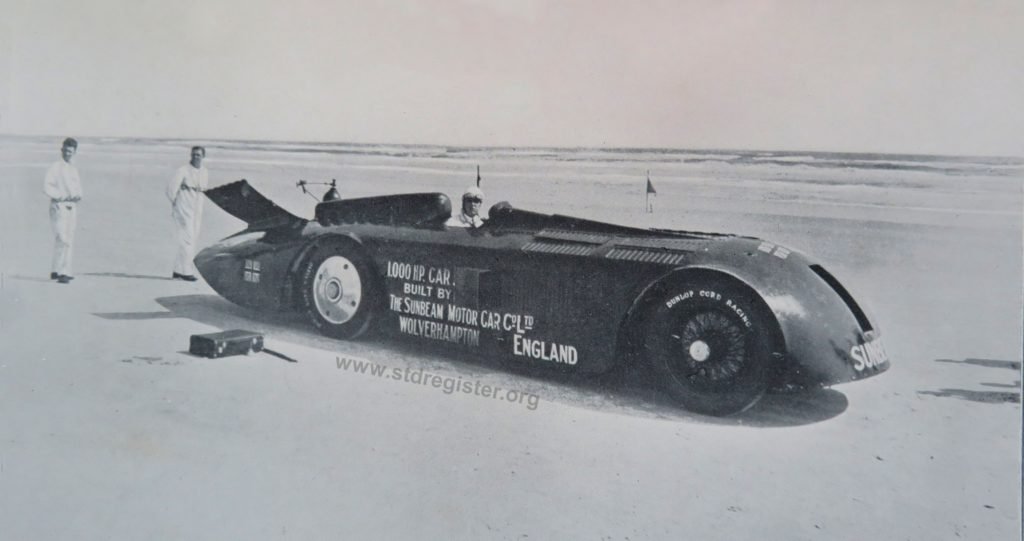
THE THOUSAND HORSE POWER CAR ON THE SANDS AT DAYTONA
Maj. (later Sir) Henry Segrave ready to go. Behind the car, standing, Lavender and Macdonald, two of the mechanics.
(Photo from: The Lure of Speed by Sir Henry Segrave 1928)
This car was the first to exceed 200mph when Sir Henry Segrave broke the land speed record at Daytona Beach in Florida on March 26th 1927 achieving an average speed of 203.792 mph. The car has two Sunbeam 22.5 litre V12 Sunbeam Matabele aero engines rated at 450HP at 2000rpm. The engines were positioned in line, with the driver sitting between the two. The engines are referred to as the front and rear engines.
The National Motor Museum have had the car in their collection since 1958 and endeavour to ensure all of the engines in their care are turned over and kept in the best possible condition. Part of this process is to survey the mechanical well-being of vehicles they know are not capable of running. The 1000HP Sunbeam was one such vehicle.
In 2016 Doug Hill the Museum’s Chief Engineer embarked on a project to restore these two engines with the aim of getting the car to move under its own power once again, which can actually be achieved with just one of the engines working.
As may be imagined, this is an expensive project and Doug Hill wanted to have the restoration work recorded on film so that should a similar job be required at some time in the future there would be a record of exactly what has to be done. The estimated cost of getting a professional film company to do this work was £6000.
The STD Register already has a history of assisting the National Motor Museum with the sourcing of spare parts for the restoration of the earlier world record breaking 350HP Sunbeam and by holding an event at Beaulieu to raise funds to help towards the that car’s restoration costs. As THE club for pre-war Sunbeams it is very much in the Register’s interests to see this wonderful 1000hp car driven again under it’s own power. So the STD Register, as the spiritual home of all Sunbeams, set itself the target of raising the sum of £6000 towards the overall restoration cost. Not least through the generosity of STD Register members the target was well exceeded and in 2020 over £7000 was handed over to the National Motor Museum.
The work on the rear engine was completed in September 2025 when it was fired up for the first time in 90 years.
.
Here is a short summary report from BBC South Today
For those who would like to see far more detail, here are five reports from the Scarf & Goggles Channel. Currently the most recent of these is from autumn 2025.
.
.
.
.
.
.
.
Part 6 of this series of videos will be posted here when available.
Update from the National Motor Museum, January 2026
Dismantling the front engine has revealed more problems than expected in the latest stage of the restoration. Work follows the momentous start-up of the rear engine for the first time in 90 years, as crowds at last year’s Beaulieu International Autojumble heard Sunbeam roar again.
National Motor Museum Senior Engineer Ian Stanfield said: “This engine’s had a hard life and looks as though it’s been dropped at some stage, then repaired before coming to Beaulieu.”
He added: “We knew we were going to find differences between the two engines but the amount of damage we’ve uncovered, while taking apart this second engine, is creating problems and means it will be more time-consuming to restore.”
Cracks discovered in the four engine blocks were caused by frost, after water had frozen in the system during Sunbeam’s earlier life.
Weeks of assessments have been carried out, as well as many hours of soaking camshafts in a hot detergent tank to unglue parts which had been stuck together by Castrol R oil.
Ian explained: “Soaking has to be carried out for just the right amount of time, so the detergent doesn’t eat into the aluminium.
“However, the good news is that while piston rings in the first engine had to be replaced, we’ve managed to get the majority of those in the second engine out intact, so have a complete set ready for the rebuild.”
Other engine parts have been taken off-site to be worked on by experts at Marcos Motor Company’s Formhalls Engine Services, whose craftsmanship and unique skills in white metal bearings also helped with the restoration of Sunbeam’s first engine.
The race is now on to complete the restoration in time for Sunbeam 1000hp to be shipped to the USA, ready to take centre stage at the Pebble Beach Concours d’ Elegance in California in August.
The aim of the Sunbeam 1000hp Restoration Campaign is to complete the restoration of ‘The Slug’ then take it back to Daytona for the centenary of its World Land Speed Record-breaking run in March 2027.
~~~~~~~~~~~~~~~
On Thursday 26th June, after completing the restoration of the second engine, the car was loaded for shipment to USA where it will be the star of the Pebble Beach concord event in California, then it will be in Daytona for the centenary celebrations in March 2027.
It will tour several museums in USA before returning to UK in due course.
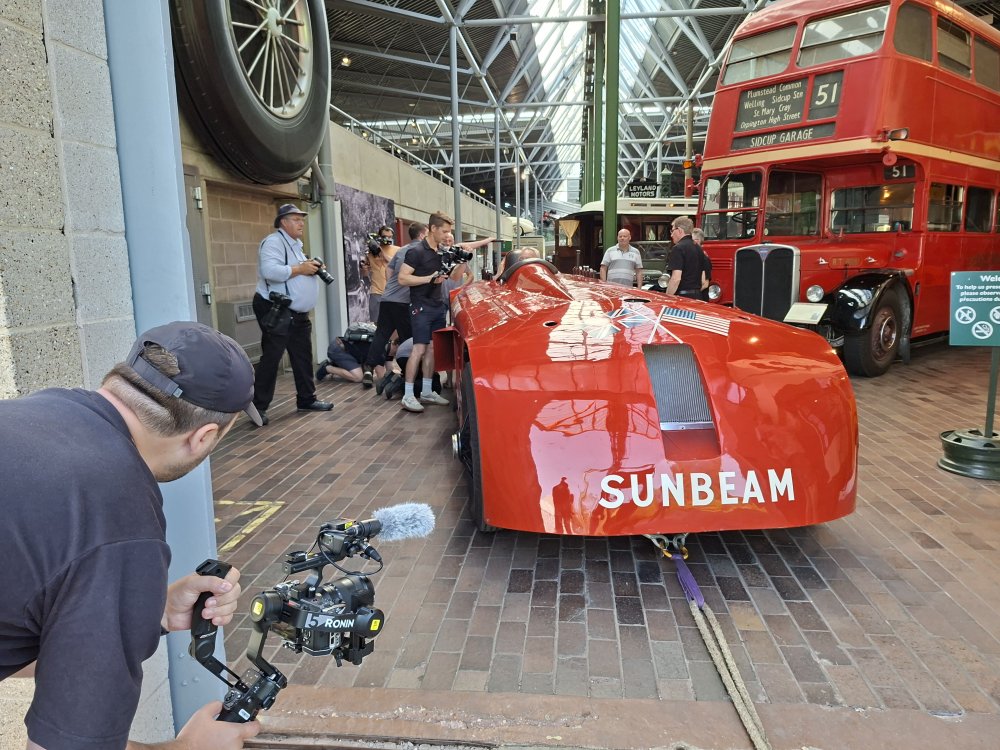
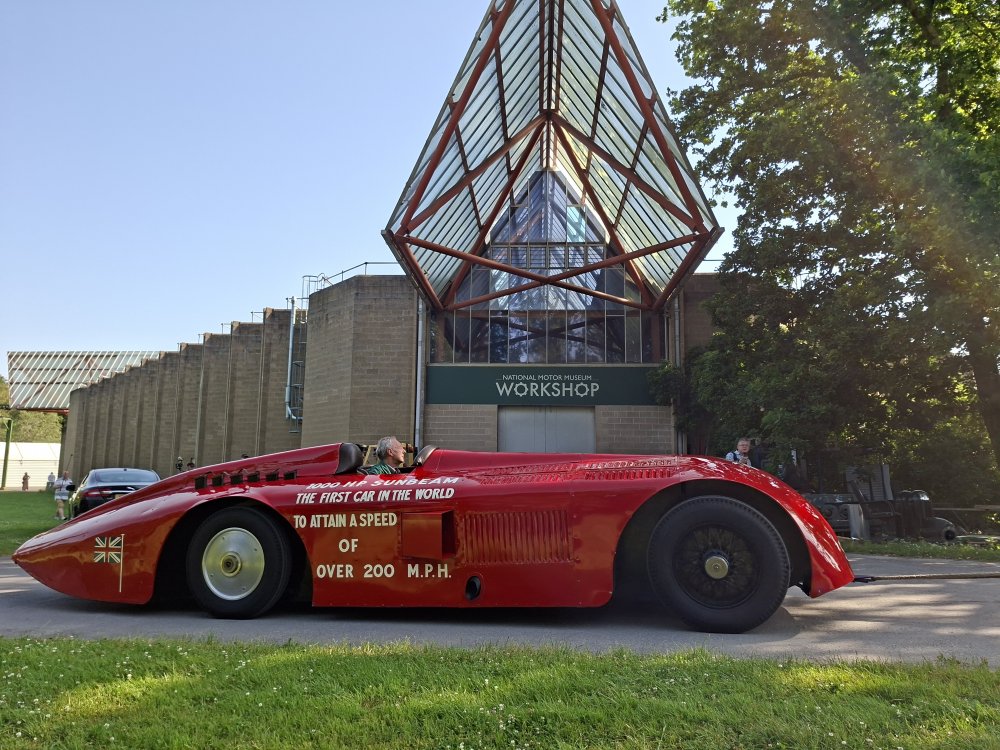
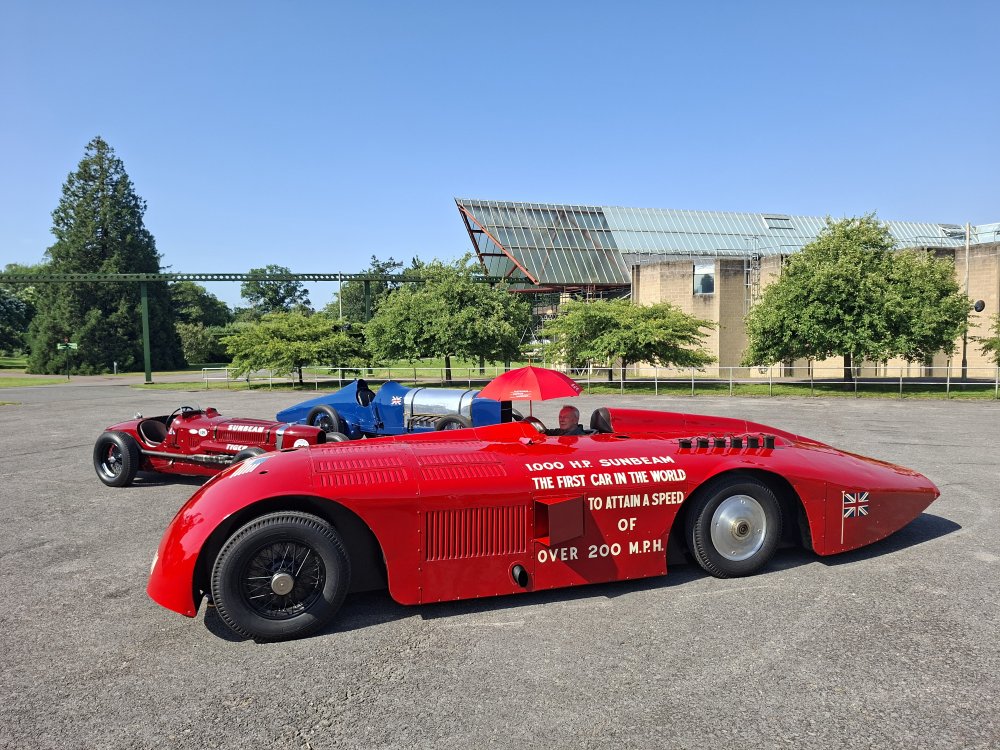
During the 1920s, the Wolverhampton-based Sunbeam Motor Car Company dominated the World Land Speed Record scene. Driven by chief engineer Louis Coatalen’s vision of adapting powerful aircraft engines into lightweight automotive chassis, Sunbeam built three legendary record-breaking cars during this golden era.
The Sunbeam 350HP initiated a brand new era of aero-engined record-breaking cars by using a modified 18.3-litre V12 “Manitou” aircraft engine. It broke the World Land Speed Record three times.
May 17, 1922: Kenelm Lee Guinness set a record of 133.75 mph at the Brooklands circuit near London.
September 24, 1924: Renowned racer Malcolm Campbell bought the car, painted it blue and named it Blue Bird, and pushed the record to 146.16 mph at Pendine Sands, South Wales.
July 21, 1925: Campbell returned to Pendine Sands, becoming the first person to break the 150 mph barrier with a record of 150.76 mph.
The Sunbeam Tiger was built as a lightweight, dual-purpose machine that could break records and also compete in circuit racing. The V12 engine, of just 4.0 litres, remains the smallest-capacity car ever to hold the Land Speed Record.
March 16, 1926: Major Henry Segrave drove the bright red car—originally nicknamed Ladybird—to a record speed of 152.33 mph on the flat sands of Southport Beach, north of Liverpool.
The Sunbeam 1000HP was the ultimate culmination of Sunbeam’s engineering, built for the sole purpose of shattering the 200 mph barrier. Nicknamed “The Slug” due to its enclosed, aerodynamic red bodywork, it was powered by two 22.5-litre V12 Matabele aircraft engines mounted fore and aft of the driver’s cockpit.
March 29, 1927: Major Henry Segrave took the car to Daytona Beach, Florida, and successfully made history by being the first man to exceed 200 mph at the then astonishing average speed of 203.79 mph.
.
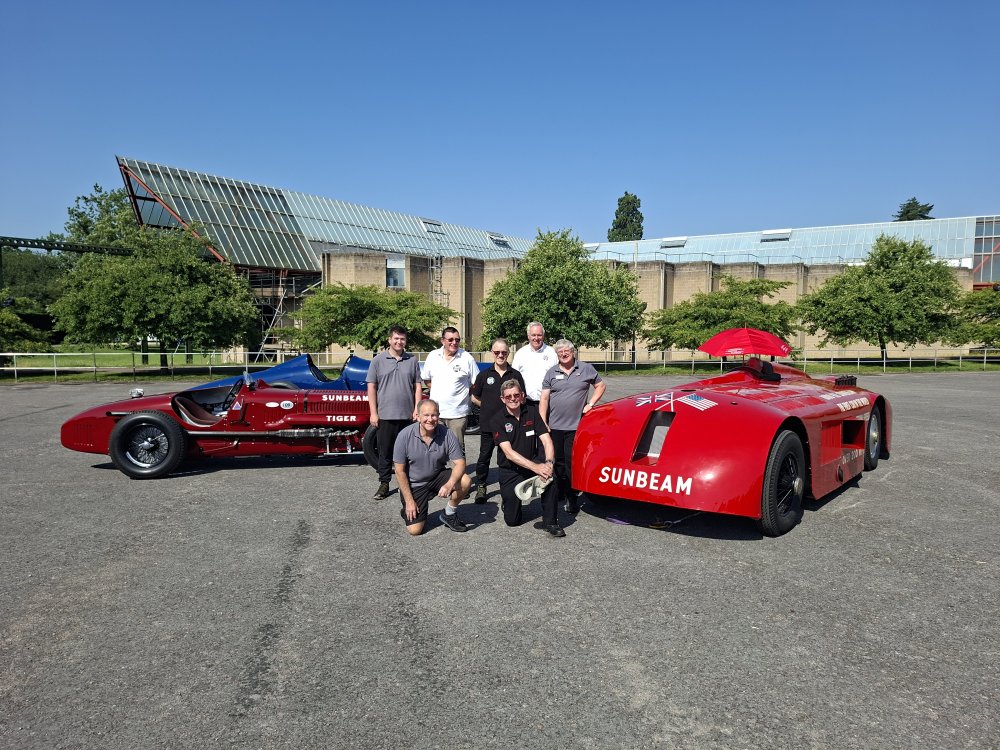
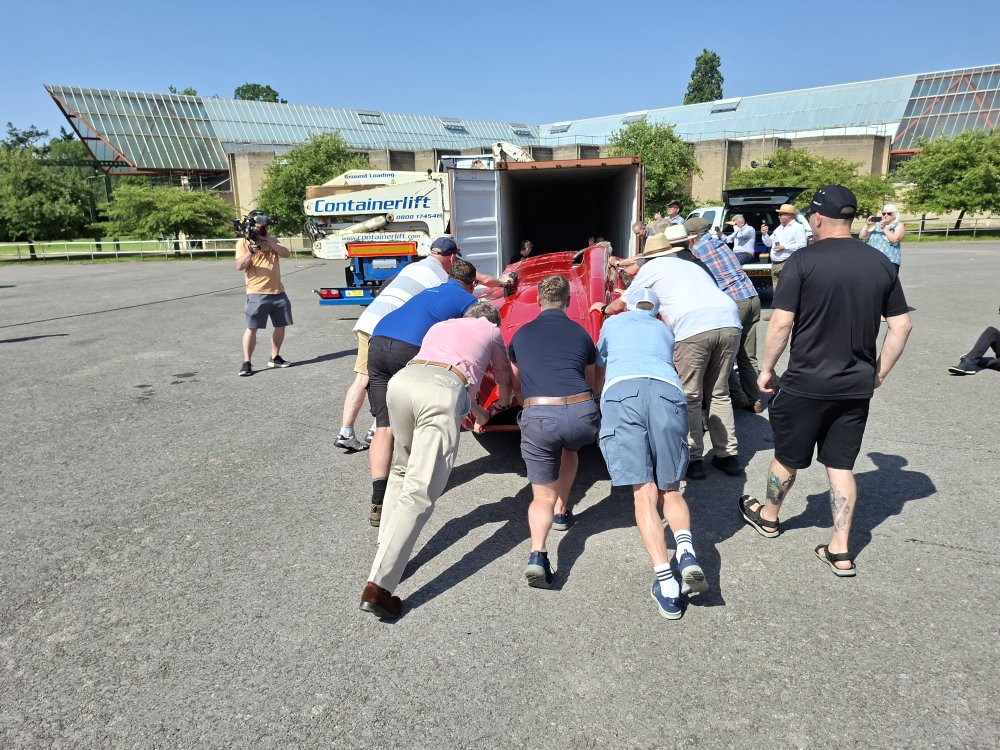
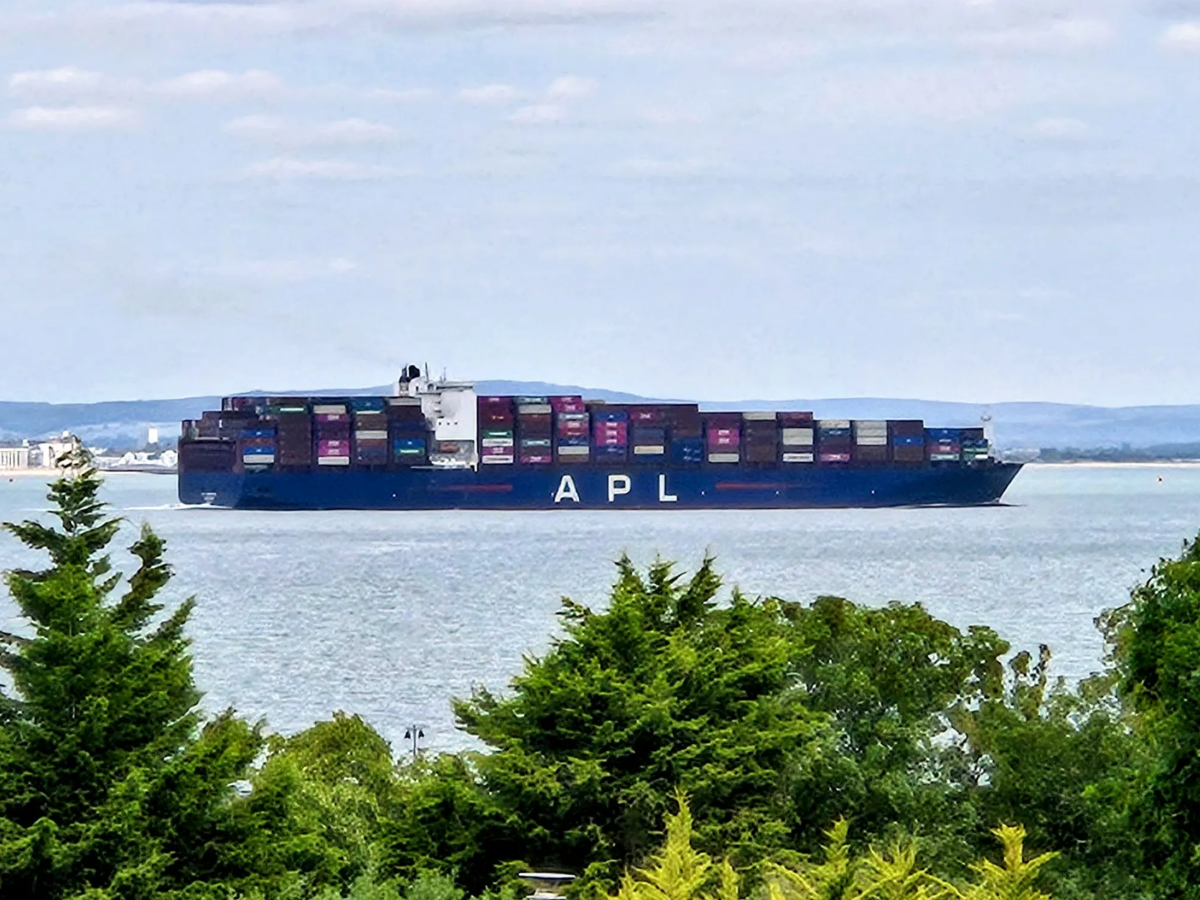
Above photos by Bryn Jones, courtesy of the National Motor Museum, Beaulieu.