Land Speed Record Centenary 1922-2022
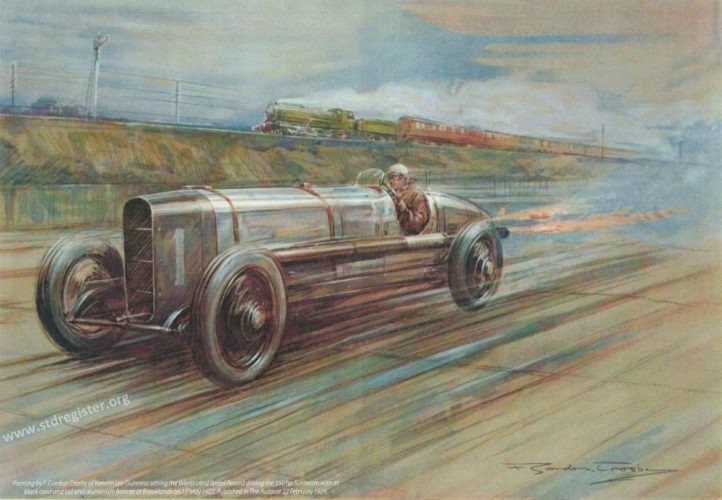
Large crowds descended on Brooklands to celebrate the anniversary of the last World Land Speed Record to be set on a closed racing circuit on 17th May 1922.

.
.
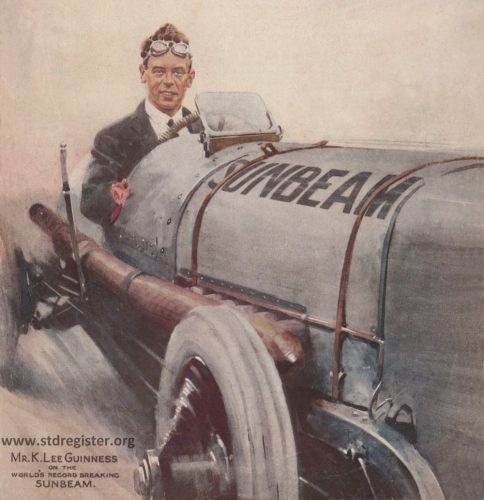
Kenelm Lee Guinness
(1887-1937)
K. Lee Guinness was a crucial member of of the Sunbeam racing team from 1913 to 1924. Before he had acted as mechanic to his elder broter Sir Algernon Lee Guinness aboard the 200hp Darracq. KLG’s first race as a driver was in the 1907 Tourist Trophy Race and the following year’s TT Race he began his association with Louis Coatalen at the wheel of a Hillman-Coatalen. He joined the Sunbeam team in 1913 and achieved his first major victory by winning the 1914 Isle of Man TT Race. He designed and developed KLG Sparking Plugs which became vital to the war effort and supplied millions for aero-engines during WWI. After the war he continued as a regular driver in the Sunbeam team. He was the man who got the best out of the 18 litre, 350 hp Sunbeam, racing it at Brooklands before and after the Land Speed Record in contrast he was also successful in voiturette racing with the 1½ litre Talbot Darracqs winning the 1922 Spanish Grand Prix and the 1924 Swiss Grand Prix. His racing career came to a premature end in 1924 when his Sunbeam crashed during the San Sebastien Grand Prix on the Lasarte circuit in Spain. On a very slippery wet surface the car skidded and hit a wall. Both Guinness and his mechanic Barrettwere thrown out and Barrett was killed. Guinness was badly injured and never raced again. As a driver he demonstrated skill, determination and courage.
.
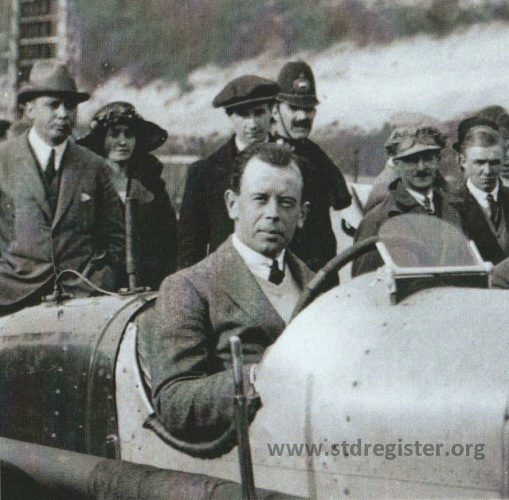
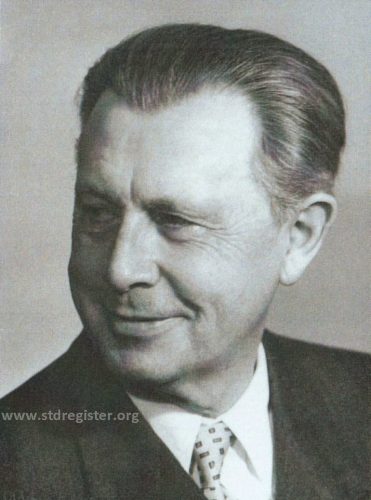
Louis Hervé Coatalen
(1879-1962)
Louis Coatalen was a French engineer who moved to England as a young man where he worked for Humber and then Hillman in Coventry before joining Sunbeam in Wolverhampton as Chief Engineer in 1909. He loved motor racing and competed regularly at Brooklands and in the Isle of Man Tourist Trophy Race in cars of his own design. With Sunbeam he was able to create teams of cars capable of competing at an international level but was persuaded not to take part himself as a driver. One most notable early triumph was the Sunbeam team winning the 1912 Coupe de l’Auto in the Grand Prix at Dieppe. Due to their astonishing speed the Sunbeams were also placed in third, fourth, and fifth places in the Grand Prix itself which was run concurrently, beating many much more powerful machines. During WWI the Sunbeam works was devoted to building aero-engines which were developed from the company’s racing car engines. At the end of the war the engine for the 350 hp Sunbeam was designed as a one-off for that car but incorporating many features from the Sunbeam-Coatalen aero-engines. Coatalen was responsible not only for the first British car to win a Grand Prix (in 1923) but also for the 1000 hp Sunbeam which established the World Land Speed Record at 203 mph in 1927. By then Sunbeam formed part of the STD Motors group which also had factories in London and Paris where Coatalen now lived. He left STD in 1930 and ranthe French Lockheed Hydraulic Brake company and the French KLG Sparking Plug company.
.